

The importance of room booking systems: benefits, features and how they work
Meeting rooms are an important part of the modern workplace, but managing them effectively can be challenging. Double bookings, unused rooms, last-minute searches for available spaces and inconsistent booking processes can all reduce productivity.
A room booking system provides a simple solution. It allows employees to see room availability, reserve spaces and, in many cases, manage associated equipment from a central digital system.
For businesses operating flexible or hybrid workplaces, room booking technology is becoming increasingly important. It can improve the employee experience, increase room utilisation and provide organisations with better visibility of how their workplace is being used.
What is a room booking system?
A room booking system is a digital platform used to manage the availability and scheduling of meeting rooms and shared workplace spaces.
Instead of relying on a paper diary, shared spreadsheet or reception desk, employees can use a digital interface to find and reserve an appropriate room.
Depending on the system, employees may be able to book rooms using:
Desktop computers
Mobile devices
Calendar applications
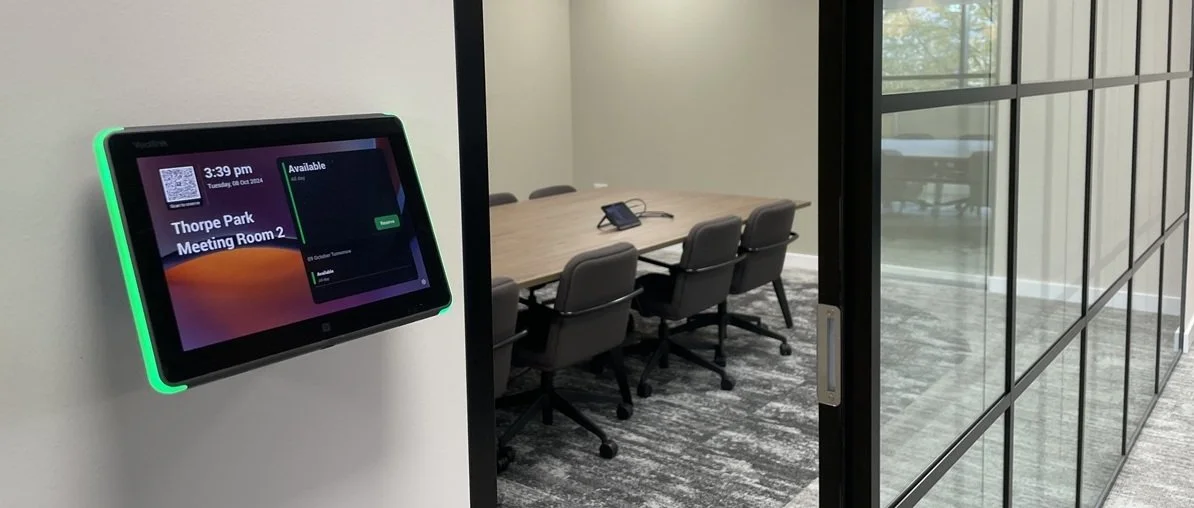
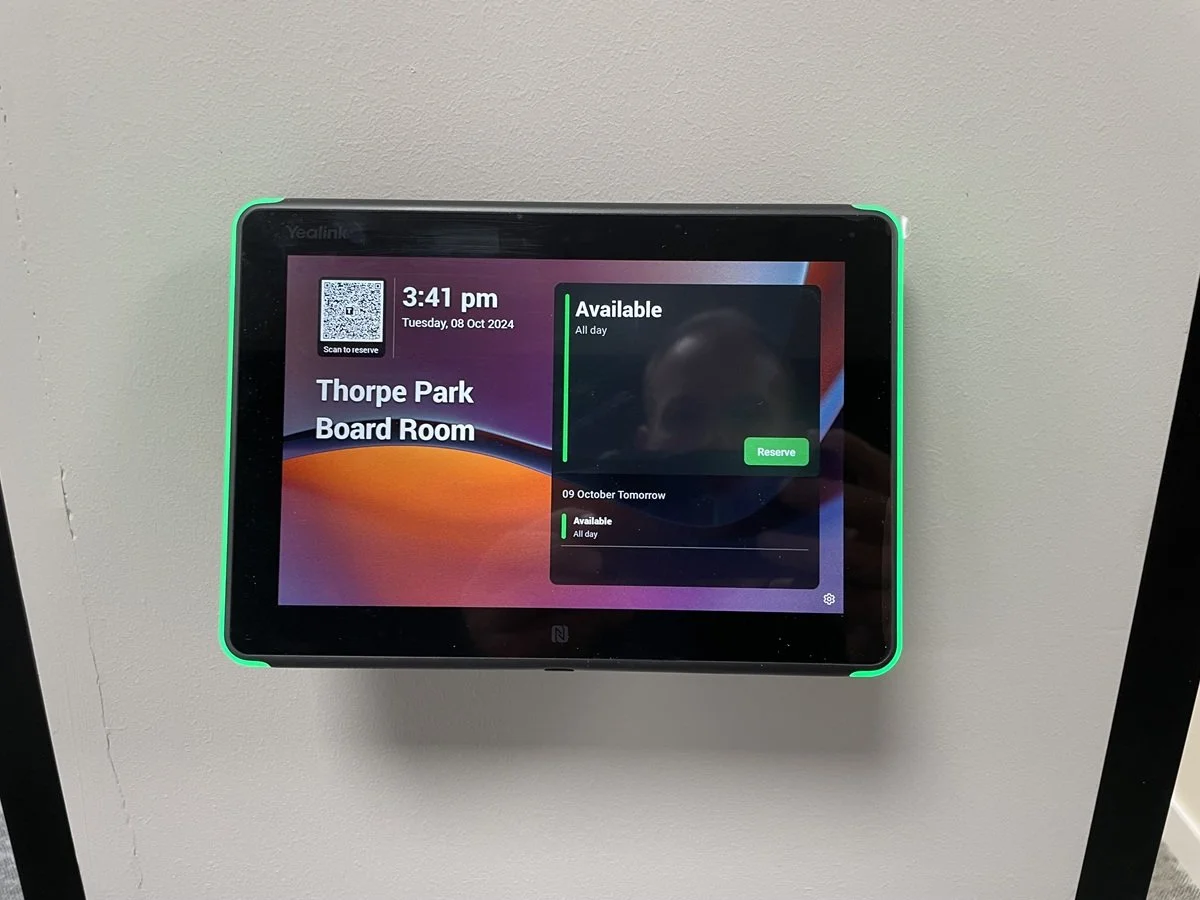
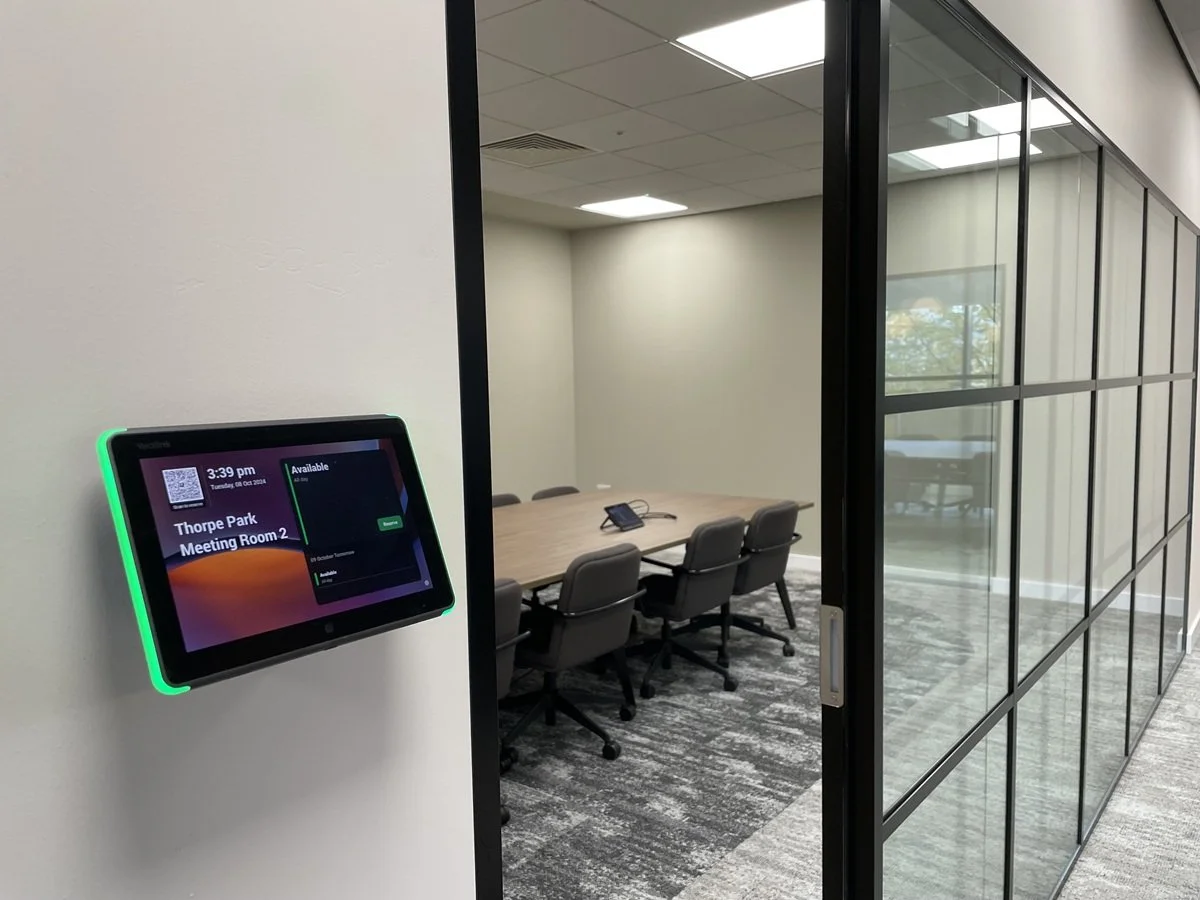
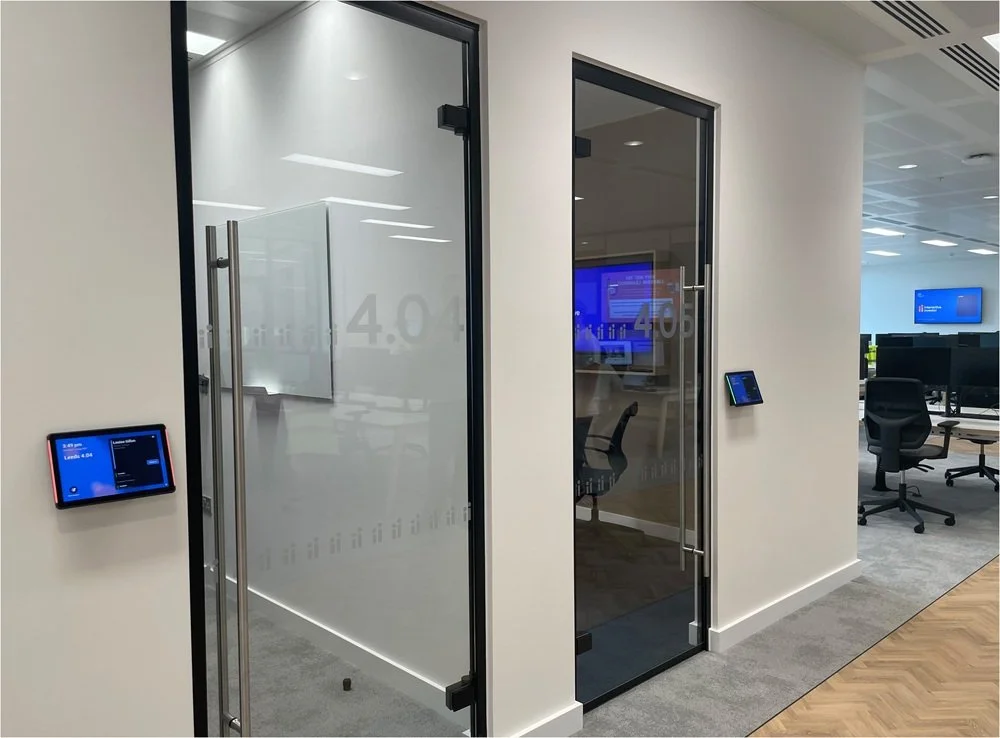
Touchscreen booking panels outside meeting rooms
Other integrated workplace technology
Modern room booking systems can also manage resources and equipment, making them useful for meeting rooms, collaboration spaces, co-working environments and educational facilities.
AV2000's room booking solutions provide real-time availability, desktop, mobile and touchscreen access, alongside resource management capabilities.
Why are room booking systems important?
The importance of room booking systems comes down to better management and utilisation of valuable workplace space.
Meeting rooms are often in high demand. Without a reliable booking process, employees may spend time looking for an available room, arrive to find a space occupied or book rooms that ultimately remain unused.
A room booking system creates greater visibility and control.
It can help organisations:
Reduce meeting-room booking conflicts
Make available spaces easier to find
Improve room utilisation
Support flexible and hybrid working
Make booking meeting rooms quicker
Manage rooms and associated resources
Provide useful information about workplace usage
The result is a more organised workplace where employees can spend less time dealing with room availability and more time getting work done.
7 key benefits of room booking systems
1. Real-time room availability
One of the most useful features of a room booking system is real-time visibility.
Employees can quickly see which rooms are available instead of relying on potentially outdated calendars or physically checking rooms.
Touchscreen panels positioned outside meeting rooms can make this particularly convenient. Employees can see whether a room is occupied or available and, where the system supports it, make a booking immediately.
AV2000 provides room booking solutions with real-time availability and touch-screen booking options.
2. Fewer booking conflicts
Double bookings can be disruptive.
Two teams arriving for the same meeting room can waste time, create frustration and potentially delay important meetings.
A centralised booking system provides a single view of room availability. Once a booking has been made, other employees can see that the space is no longer available.
This makes the booking process more predictable and reduces the likelihood of scheduling conflicts.
3. Better use of workplace space
Office space is expensive, so organisations need to understand how effectively it is being used.
A room booking system can provide greater visibility of demand for different spaces. This can help businesses identify rooms that are frequently booked, spaces that are consistently underused and periods when demand is particularly high.
That information can support longer-term workplace decisions.
For example, if a business discovers that small meeting rooms are regularly booked while larger conference rooms are often empty, it may be able to rethink how its available space is configured.
4. Improved employee experience
Finding a meeting room should not be difficult.
An intuitive room booking system gives employees a straightforward way to find and reserve the space they need.
This is particularly valuable in flexible workplaces where employees may not have a permanent desk and may be unfamiliar with which rooms are available on a particular day.
A simple booking experience removes unnecessary friction from the working day.
5. Supports hybrid working
Hybrid working has changed the requirements of meeting spaces.
A modern meeting room may need to accommodate people sitting around a table as well as colleagues joining remotely through Microsoft Teams, Zoom or another video-conferencing platform.
Room booking technology can form part of a wider hybrid meeting-room solution.
AV2000's workplace solutions include Microsoft Teams Rooms, Zoom Room systems and hybrid meeting rooms, with considerations including cameras, microphones, speakers, displays, acoustics and connectivity.
This means room booking does not have to operate as a standalone technology. It can form part of an integrated meeting-room experience.
6. Helps manage rooms and resources
A meeting room is not always just a room.
Businesses may need to manage associated equipment, technology and resources. A booking system can help organisations coordinate these requirements alongside the space itself. This can be particularly useful where different rooms have different capabilities.
For example, one room might be designed for video conferencing, another for large presentations and another for smaller collaborative meetings.
7. Provides useful workplace information
A room booking system can provide more than a convenient way to make reservations.
Information about room demand and usage can help facilities and workplace teams understand how their spaces are being used.
This can support decisions about:
Office layout
Meeting-room capacity
Future workplace investment
Technology requirements
Number and type of meeting spaces
How different areas of an office are being used
In other words, room booking technology can contribute to data-informed workplace management.
How do room booking systems work with AV technology?
Room booking and audio visual technology are increasingly interconnected. A typical modern meeting room may include:
A room booking panel
Display screens
Video-conferencing equipment
Cameras
Microphones
Speakers
Touchscreen controls
Wireless presentation technology
When these technologies are designed to work together, employees can have a more consistent experience from the moment they book a room to the moment their meeting finishes.
For example, an employee might book a meeting room, arrive at the scheduled time, use a touchscreen interface to start the meeting and connect with remote participants using the room's integrated video-conferencing system.
This reduces the amount of time employees need to spend managing technology.
What does a room booking system look like in practice?
A good example is AV2000's work with Premier Farnell in Leeds.
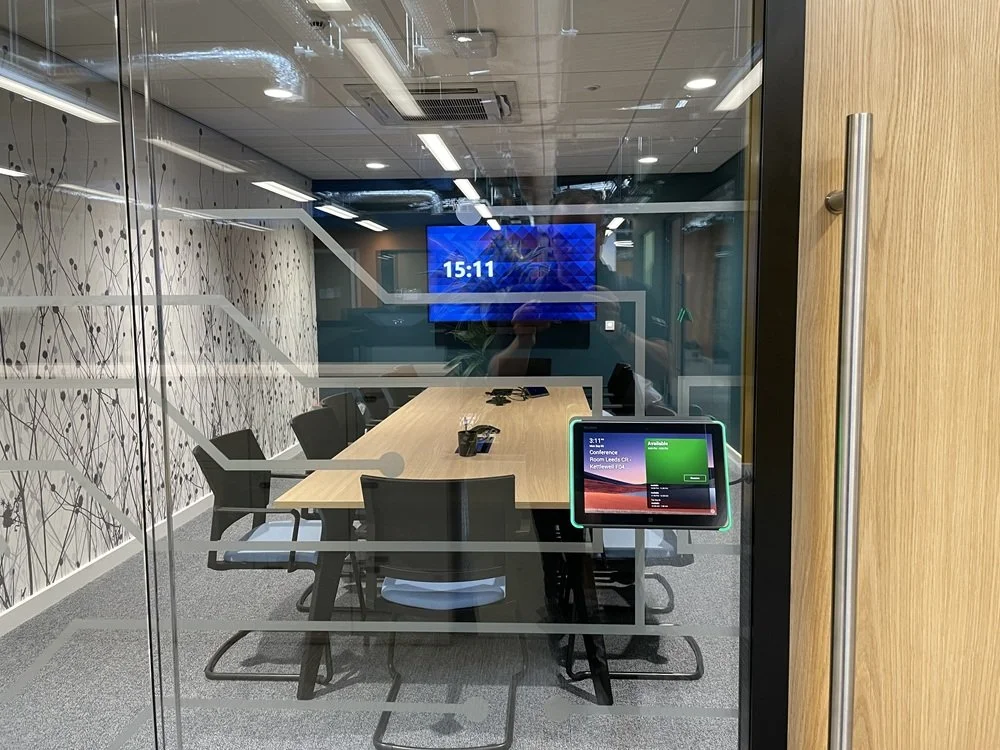
The project involved 37 workspaces, including meeting rooms, collaborative areas, reception spaces and conference areas. One of the challenges identified was inconsistent room booking and low room utilisation. As part of the solution, AV2000 installed room booking panels providing real-time availability and walk-up booking.
The wider project also incorporated Microsoft Teams Rooms, PTZ cameras, beamforming microphone arrays, interactive touch displays, digital signage and centralised AV control.
The resulting system helped maximise room utilisation through live booking visibility and provided a more consistent experience across the different spaces.
This demonstrates an important point: the value of room booking technology is greatest when it is considered as part of the wider workplace environment rather than as an isolated booking tool.
How do room booking systems support hybrid workplaces?
Hybrid workplaces require employees to use office space more flexibly.
A business may have employees working remotely on one day and from the office on another. Meeting rooms therefore need to be easy to discover, reserve and use.
Room booking systems can help by making shared spaces visible and accessible.
When combined with suitable AV technology, they can also help ensure that the physical room is ready for a hybrid meeting.
For hybrid meetings, AV2000 recommends considering factors such as lighting, acoustics, microphones, speakers, cameras, displays and access to power and HDMI connectivity.
The booking system therefore becomes one part of a broader process:
Find a suitable room → book it → arrive → start the meeting → collaborate with colleagues in the room and remotely.
The fewer obstacles in that process, the better the meeting experience.
What features should a room booking system have?
When choosing a room booking system, businesses should consider both the booking process and how the technology fits into their wider workplace.
Important features can include:
Real-time availability
Employees should be able to see whether a room is available without relying on outdated information.
Multiple booking methods
Desktop, mobile and touchscreen access can give employees flexibility in how they reserve rooms.
Walk-up booking
Touchscreen panels can allow employees to book available rooms immediately when they are already in the workplace.
Resource management
The system should be able to accommodate the organisation's approach to rooms, equipment and other shared resources.
Ease of use
Employees should not need extensive training to find and book a room.
Scalability
The solution should be capable of supporting additional rooms, users or locations as the organisation grows.
Integration with meeting-room technology
Where possible, room booking should complement the AV and video-conferencing technology already installed in the workplace.
Who can benefit from a room booking system?
Room booking systems can be useful for organisations with shared spaces and multiple people competing for access to those spaces.
Common applications include:
Corporate offices
Hybrid workplaces
Co-working spaces
Educational facilities
Large office developments
Multi-room business premises
Organisations with shared specialist equipment
The scale of the organisation is less important than the complexity and demand for its shared spaces. Even a smaller organisation can benefit if employees regularly struggle to find or reserve suitable meeting rooms.
When should a business consider installing a room booking system?
There are several signs that an organisation may benefit from room booking technology.
Consider a room booking system if:
Employees regularly struggle to find available meeting rooms.
Meeting rooms are frequently double-booked.
Rooms are booked but often left unused.
Employees have to walk around the office looking for available space.
Your organisation has adopted hybrid or flexible working.
Different rooms have different AV capabilities.
You operate across multiple floors, departments or locations.
You need better information about workplace space utilisation.
Existing room-booking processes rely heavily on manual administration.
If several of these problems sound familiar, improving room management could have a noticeable effect on workplace efficiency.
How much does a room booking system cost?
There is no single price for a room booking system because the cost depends on the size and requirements of the workplace.
Factors that can affect the overall investment include:
Number of rooms
Number of users
Number of locations
Touchscreen booking panels
Software and licensing
Calendar integration
Resource management requirements
Existing AV equipment
New meeting-room technology
Installation and configuration
Ongoing support
For this reason, businesses should assess their requirements before choosing a solution rather than selecting a system based solely on its initial price.
Why professional AV integration matters
A room booking system is most effective when it fits naturally into the workplace.
Installing booking panels without considering the meeting-room technology, user experience and wider workplace requirements can result in a fragmented system.
A professional AV integrator can assess the space, understand how employees use it and design a solution around the organisation's requirements.
AV2000 provides professional AV design, planning, installation and commissioning, as well as workplace solutions including room booking, Microsoft Teams Rooms, Zoom Rooms and hybrid meeting environments.
For larger projects, this integrated approach can also help ensure that room booking, AV, digital signage and other workplace technologies work together consistently.
Frequently asked questions about room booking systems
What is a room booking system?
A room booking system is digital technology that allows organisations to manage the availability and scheduling of meeting rooms and other shared spaces.
Why are room booking systems important?
Room booking systems are important because they can improve room availability visibility, reduce booking conflicts, increase space utilisation and make it easier for employees to find suitable meeting rooms.
How does a meeting room booking system work?
Users typically check room availability through a desktop, mobile device or touchscreen panel and reserve an available room. Depending on the system, it can also manage resources and integrate with wider workplace technology.
Can room booking systems support hybrid working?
Yes. Room booking systems can help hybrid workplaces manage shared meeting spaces, while integrated AV technology can provide the cameras, microphones, displays and conferencing capabilities needed for remote participation.
Can a room booking system be integrated with AV technology?
Yes. Room booking can be incorporated into a wider AV environment that includes video conferencing, displays, cameras, microphones, speakers and room-control technology.
Can employees book a meeting room when they arrive?
Some systems support walk-up booking through touchscreen panels positioned outside meeting rooms. AV2000's Premier Farnell project, for example, included room booking panels providing real-time availability and walk-up booking.
Can room booking systems improve room utilisation?
They can. By making availability more visible and providing information about room usage, booking systems can help organisations make better use of their existing meeting spaces.
Are room booking systems suitable for small businesses?
Yes. The key consideration is not necessarily the size of the organisation but how many shared spaces it needs to manage and how frequently those spaces are used.
What should I consider when choosing a room booking system?
Consider ease of use, real-time availability, booking methods, walk-up booking, resource management, scalability, integration with existing workplace technology and the level of installation and support required.
The future of room booking systems
The workplace is becoming increasingly connected.
Meeting rooms are no longer simply physical spaces containing a table and chairs. They can include video conferencing, interactive displays, digital signage, centralised control systems and other connected technologies.
Room booking systems provide the link between people and these shared spaces.
As organisations continue to adopt flexible and hybrid working, the ability to understand, manage and optimise workplace space is likely to become increasingly important.
The most effective solutions will therefore be those that combine simple booking, clear availability, intelligent space management and integrated workplace technology.
Conclusion: why room booking systems matter
The importance of room booking systems extends beyond simply reserving a meeting room.
For organisations, they can provide a more efficient way to manage shared spaces, reduce scheduling problems and improve the use of existing workplace facilities.
For employees, they provide a straightforward way to find and book the right space when they need it.
And when integrated with professional AV technology, room booking can become part of a seamless workplace experience that supports both in-person and hybrid collaboration.
AV2000 provides room booking systems alongside professional audio visual solutions, including design, installation and integration. Its solutions offer real-time availability, multiple booking methods and resource management, while its wider workplace expertise includes Microsoft Teams Rooms, Zoom Rooms and hybrid meeting environments.
For organisations looking to improve the way they manage meeting rooms and workplace technology, a well-designed room booking system can be a practical investment in productivity, space utilisation and employee experience.
Key takeaways
Room booking systems make it easier to manage shared workplace spaces.
Real-time availability can reduce booking conflicts and make rooms easier to find.
Touchscreen panels can support convenient walk-up booking.
Room booking technology can help organisations improve workplace space utilisation.
Resource management can help businesses coordinate rooms and associated equipment.
Room booking systems can support flexible and hybrid working environments.
Integration with AV technology can create a more consistent meeting-room experience.
Professional design and installation can help ensure room booking works effectively alongside wider workplace technology.