

Understanding 4K, 8K and beyond: what higher resolution means for modern workplaces
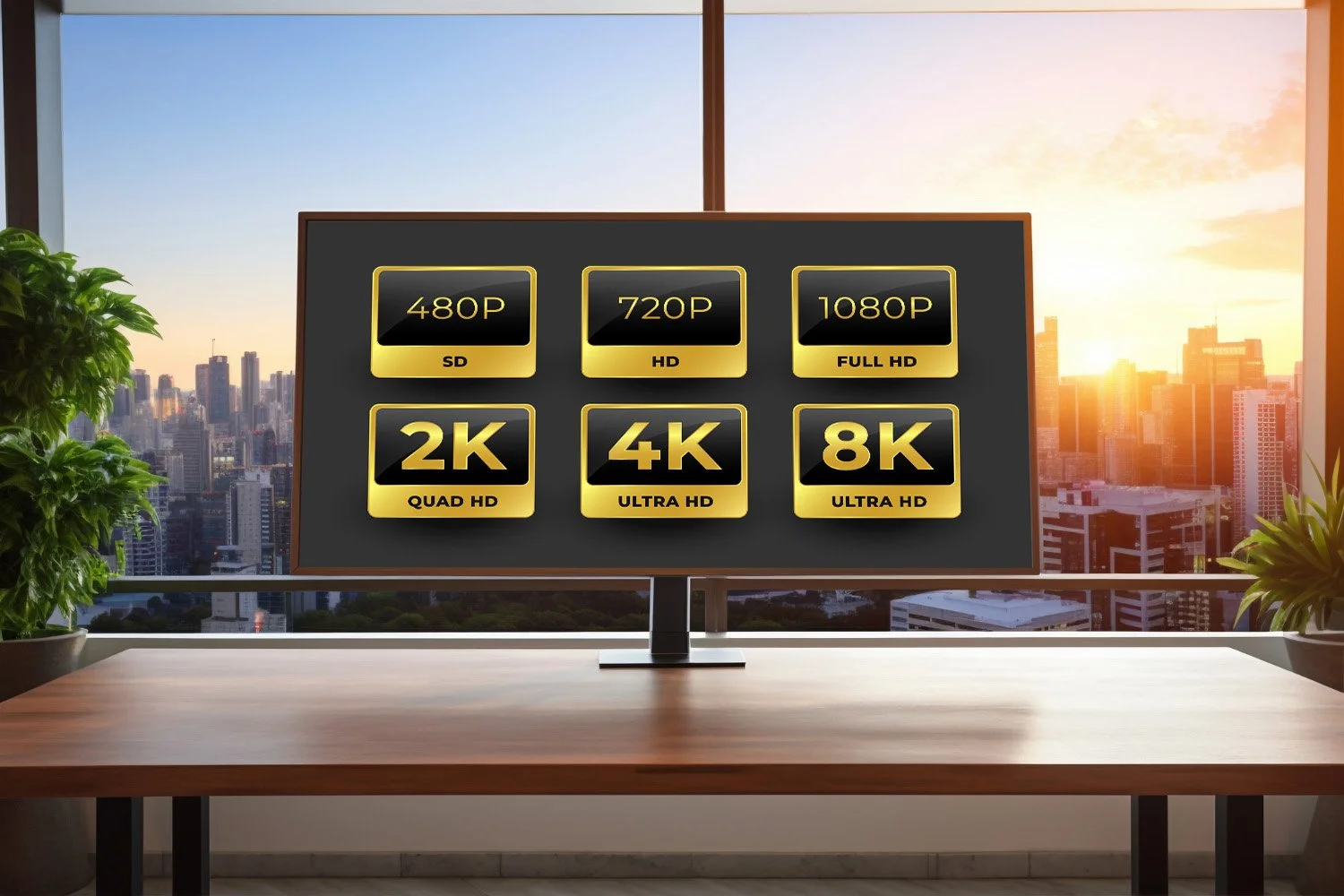
As organisations continue to invest in digital transformation, the quality of workplace technology has become increasingly important. From boardrooms and collaboration spaces to digital signage and executive briefing centres, display technology plays a critical role in how businesses communicate, collaborate and present information.
Terms such as 4K and 8K are now commonplace in discussions about workplace technology, but what do these resolutions actually mean for businesses? More importantly, how can higher-resolution displays improve productivity, engagement and decision-making across the organisation?
Why Display Quality Matters in the Workplace
Modern workplaces rely heavily on visual communication. Employees share presentations, analyse complex data, participate in video conferences and collaborate on projects across multiple locations.
When display quality is poor, information can become difficult to read, meetings become less effective and employee engagement can suffer. High-resolution displays help ensure that every participant can clearly see the content being presented, regardless of where they are sitting in the room.
For businesses, this means more productive meetings, clearer communication and a better overall workplace experience.
Understanding 4K Resolution
4K Ultra HD offers a resolution of 3,840 × 2,160 pixels, providing four times the detail of traditional Full HD displays.
In a corporate environment, this increased resolution delivers several practical advantages:
Improved Presentation Clarity
Detailed spreadsheets, engineering drawings, financial reports and data dashboards are easier to view on large-format 4K displays. Fine details remain sharp and legible, reducing the need for participants to zoom in or request additional explanations.
Enhanced Video Conferencing
With hybrid working now a permanent feature of many organisations, video conferencing quality has become a key consideration. 4K displays allow remote participants to appear more natural and lifelike, helping create stronger engagement between in-office and remote teams.
Better Collaboration
Whether using interactive displays, wireless presentation systems or collaborative whiteboarding tools, 4K technology provides a more detailed and responsive experience that supports effective teamwork.
Future-Proof Technology Investments
Many modern collaboration platforms and workplace technologies are designed with 4K compatibility in mind. Investing in 4K-capable systems helps organisations prepare for future technology requirements while extending the lifespan of their AV infrastructure.
What Additional Benefits Does 8K Offer?
8K resolution increases the pixel count even further, delivering four times the resolution of 4K.
Although 8K adoption remains relatively limited in corporate environments, certain applications can benefit significantly from the additional detail.
Executive Briefing Centres
Organisations that regularly present complex information to clients, stakeholders or senior leadership teams may benefit from the exceptional image quality offered by 8K displays. Large datasets, detailed visualisations and high-resolution imagery can be displayed with remarkable clarity, helping decision-makers analyse information more effectively.
Large Meeting Spaces
In large boardrooms, auditoriums and training facilities, maintaining image quality across very large displays can be challenging. 8K displays help ensure that content remains crisp and readable, even for participants seated further away.
Specialist Industries
Sectors such as engineering, architecture, healthcare, manufacturing and design frequently work with highly detailed visual content. For these organisations, 8K displays can provide greater precision when reviewing technical drawings, models and visual simulations.
Beyond Resolution: Creating Better Workplace Experiences
While higher resolution is important, businesses should recognise that successful workplace technology strategies involve more than simply increasing pixel counts.
Several other innovations are transforming corporate display environments.
Larger Displays with Greater Detail
As meeting room displays continue to increase in size, higher resolutions become increasingly valuable. Large-format displays allow more information to be shared simultaneously without compromising readability.
Improved Collaboration Technologies
Modern workplace displays are increasingly integrated with collaboration platforms such as video conferencing systems, digital whiteboards and content-sharing solutions. Higher-resolution displays enhance the effectiveness of these tools by delivering clearer visuals and more engaging user experiences.
AI-Powered Video and Content Enhancement
Artificial intelligence is beginning to play a larger role in workplace AV systems. AI-driven image processing can optimise content, improve video quality and automatically adjust displays based on room conditions and viewing distances.
Enhanced Digital Signage
Corporate digital signage is evolving from simple information boards into dynamic communication platforms. High-resolution displays allow businesses to create more impactful employee communications, visitor experiences and brand messaging.
The Business Case for Investing in Higher Resolution Displays
When evaluating AV technology investments, organisations often focus on hardware specifications. However, the real value lies in the business outcomes that improved technology can deliver.
Higher-resolution displays can contribute to:
More productive meetings
Better hybrid collaboration
Improved employee engagement
Enhanced client presentations
Clearer communication of complex information
Stronger corporate branding
Increased return on workplace technology investments
While these benefits may not always be immediately measurable, they can have a significant impact on organisational effectiveness over time.
Is 4K Enough for Most Organisations?
For the majority of businesses, 4K currently represents the ideal balance between performance, cost and practicality.
It provides excellent image quality for meeting rooms, collaboration spaces, training environments and digital signage applications while remaining widely supported by modern workplace technologies.
8K may become more relevant as display sizes increase and content ecosystems mature, but for most organisations today, the priority should be implementing a well-designed AV strategy that fully leverages the capabilities of 4K technology.
Looking Ahead
As workplace expectations continue to evolve, display technology will remain a key component of the employee and client experience. The future is not simply about higher resolutions; it is about creating environments that support collaboration, communication and informed decision-making.
Whether organisations are upgrading boardroom displays, redesigning collaboration spaces or investing in digital signage networks, understanding the benefits of 4K, 8K and future display technologies can help ensure smarter technology decisions and stronger business outcomes.
In the modern workplace, clearer visuals lead to clearer communication - and that ultimately drives better business performance.