

What Equipment Do You Need for a Hybrid Meeting Room?
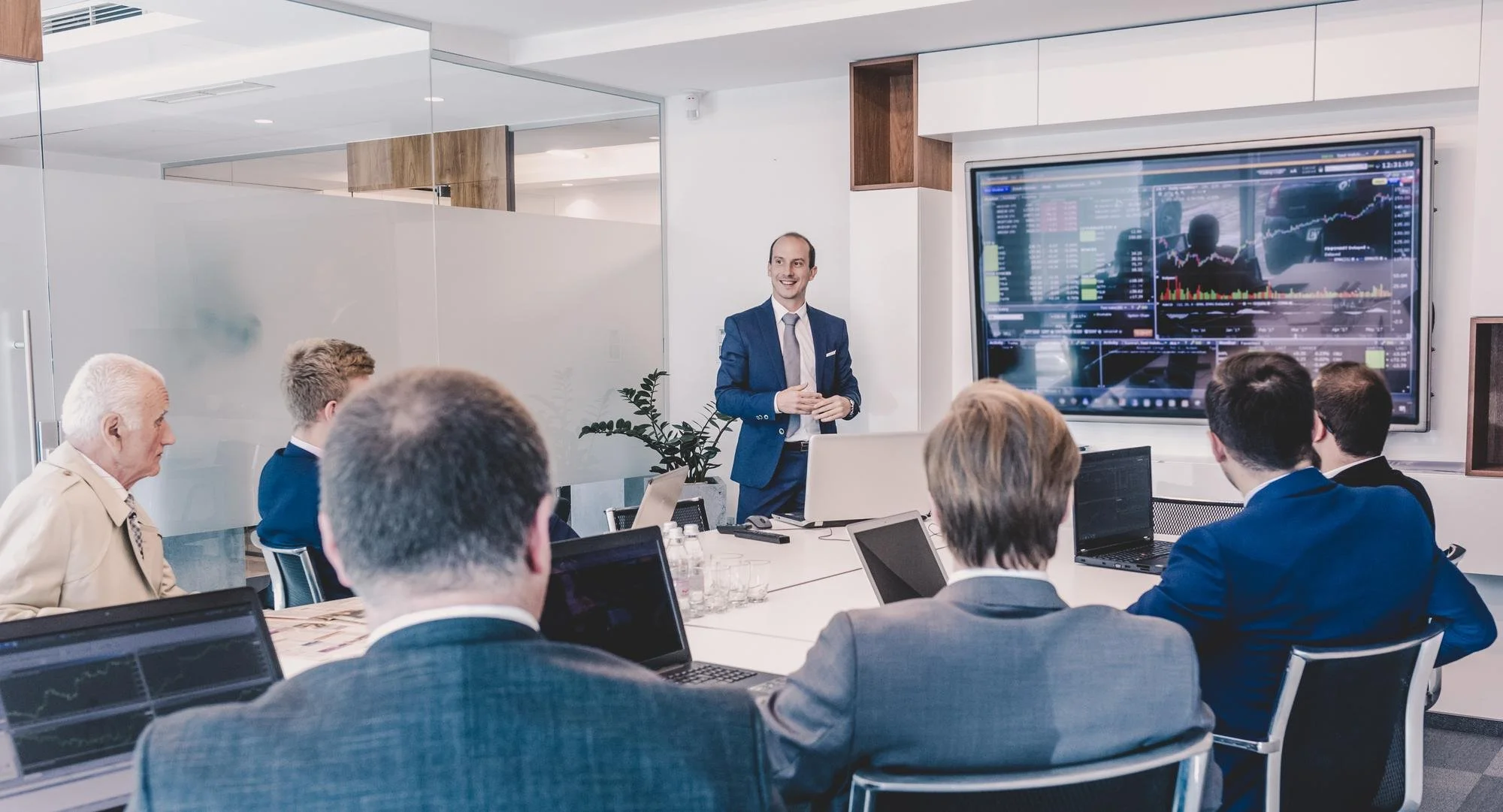
Essential Equipment for a Hybrid Meeting Room
A fully functional hybrid meeting room requires five core hardware components: a dedicated display system, intelligent video capture hardware, an omnidirectional audio system, a central control compute unit, and connectivity/content-sharing tools.
Together, these components synchronise in-room participants with remote attendees across unified communications platforms like Microsoft Teams, Zoom, or Cisco Webex.
Core Hardware Checklist for Hybrid Meeting Rooms
-
Visualises remote participants and shared content.
Dual 55"–75" 4K commercial displays or interactive touchscreens.
Samsung QB Series, LG Commercial Display, Neat Board.
-
Captures in-room attendees with auto-framing.
4K resolution, 120°+ field-of-view, PTZ (Pan-Tilt-Zoom), or 360° AI tracking.
oly Studio, Logitech Rally, Owl Labs Meeting Owl 3.
-
Delivers clear two-way sound transmission.
Beamforming microphone array, acoustic echo cancellation (AEC), full-duplex speakers.
Shure Stem Ecosystem, Jabra Speak2, Sennheiser TeamConnect.
-
Powers the room OS and provides one-touch join.
Dedicated mini PC (Windows/Android) with a tabletop touch controller.
Logitech Tap, Yealink Touch Console, Crestron Flex.
-
Enables screen sharing and peripheral routing.
HDMI 2.0/2.1, USB-C passthrough, wireless presentation hubs.
Barco ClickShare, Mersive Solstice, Anker HDMI cables.
Breakdown of Hardware Requirements by Subsystem
-
Hybrid rooms require high-resolution displays placed at eye level when seated. Large spaces typically implement dual-screen configurations: one screen dedicated to video gallery views (e.g. Microsoft Teams Front Row or Zoom Smart Gallery) and the second screen reserved for presentation slides or shared documents.
-
Standard webcams are inadequate for medium-to-large meeting rooms. Hybrid setups rely on AI-powered smart cameras featuring:
• Group Framing: Automatically zooms to fit all in-room attendees in the frame.Speaker Tracking: Uses audio direction and facial recognition to highlight the active speaker.
Multi-Stream Framing: Cuts individual room occupants into separate video tiles for remote participants.
-
Audio quality is the critical failure point in hybrid collaboration. A standard setup integrates beamforming microphone arrays mounted on ceilings, walls, or tables to isolate voice signals while filtering out ambient noise (e.g. HVAC units, typing). Integrated full-duplex speakers prevent sound clipping during simultaneous speaking.
-
To present content, rooms require both wired connectivity (USB-C and HDMI) and wireless screen-sharing receivers. Wireless presentation devices allow users on guest networks to share content to the room display without installing software drivers.
Frequently Asked Questions (FAQ)
-
Standard webcams have limited fields of view and fixed focal lengths. Intelligent hybrid room cameras feature 120°+ wide-angle lenses, optical PTZ capabilities, and AI framing to ensure every in-room participant is clearly visible to remote attendees.
-
Dedicated compute units (such as Microsoft Teams Rooms or Zoom Rooms consoles) run a permanent room OS, enabling one-touch meeting joins, consistent reliability, and background management without relying on personal laptops.
-
Dual screens separate video gallery views from shared presentation content. This allows in-room attendees to view remote participants at eye level while simultaneously reviewing slides or documents.
-
Beamforming microphones dynamically focus on active speakers while actively cancelling ambient room noise, HVAC hums, and acoustic reflections, delivering clear speech to remote participants.
Upgrade Your Workplace AV Support Today
Don't let AV downtime interrupt critical business meetings. Secure your audiovisual infrastructure with reliable, SLA-backed maintenance and expert engineering support tailored to your organisation.
Contact us today to explore customised AV support contracts and request a tailored quote for your workspace.