

What Are The Best Meeting Room Cameras for 2026?
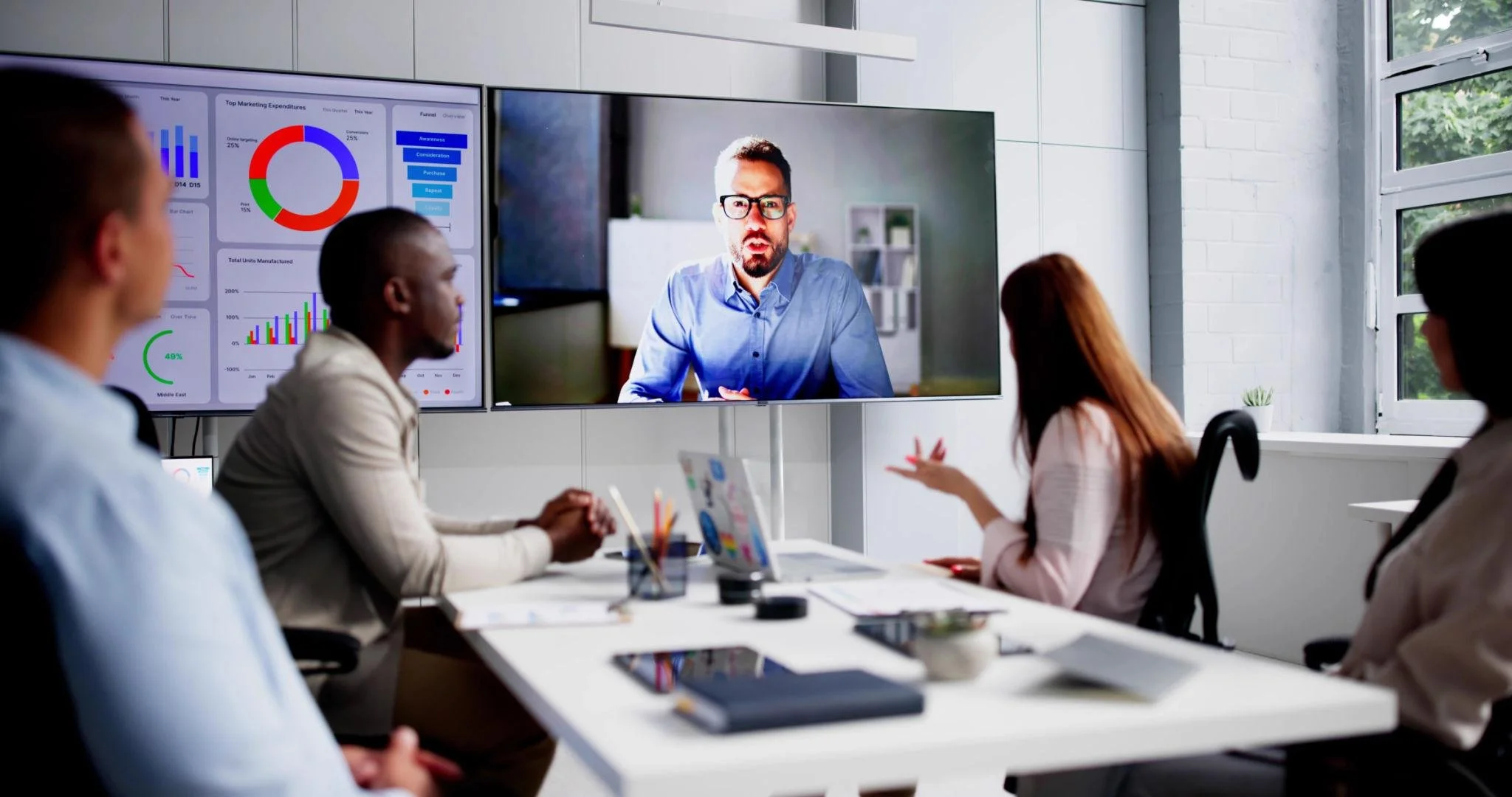
The best meeting room cameras in 2026 are defined by multi-lens AI auto-framing, dual-stream participant tiles (gallery equity), and centre-of-table tracking companion systems.
Rather than relying on basic static webcams, enterprise meeting environments leverage smart cameras that automatically detect, track, and frame in-room speakers while filtering out background distractions.
Top Recommended Meeting Room Cameras in 2026
-
Medium to Large Room (8–18 seats).
Dual-camera front bar with 15x optical zoom + 360° tabletop companion camera for centre-table speaker tracking.
£3,200 – £4,500 (combined)
-
Medium to Large Room (8–16 seats).
Dual 4K camera array, 16x digital zoom, Neat Sense environmental sensors, and multi-stream individual participant framing.
£2,800 – £3,400
-
Huddle to Medium Room (2–10 seats).
Centre-of-table 360° 4K camera, 8-mic array, intelligent speaker auto-focus split screen.
£1,000 – £1,400
-
Medium Rooms (6–12 seats).
20MP 4K sensor, 95° Field of View, Poly DirectorAI (smart group, speaker, and presenter tracking).
£1,800 – £2,400
-
Medium Boardrooms (6–12 seats).
360° all-in-one 10K panoramic centre-table camera with Multi-Stream People Feed for Microsoft Teams Rooms.
£1,400 – £1,900
Category Breakdown by Deployment Scenario
-
Why it wins: Combines an optical PTZ camera with an AI Viewfinder lens to continuously map room occupancy. When paired with Logitech Sight (a tabletop companion camera), it dynamically switches between front and centre views to present the best facial angle for remote attendees.
Platform Certification: Certified natively for Microsoft Teams Rooms, Zoom Rooms, and Google Meet.
-
Why it wins: Ideal for spaces with flexible seating or round tables where a front-of-room camera creates awkward profile views. Sits in the middle of the table, capturing a 360-degree panoramic strip along with isolated, auto-tracked close-ups of active speakers.
Platform Certification: Plug-and-play USB deployment across all platforms.
-
Why it wins: Features advanced multi-camera AI processing that isolates each in-room attendee into individual video tiles on remote screens (Neat Symmetry), preventing in-room attendees from appearing distant or lost in large spaces.
Platform Certification: Native deployment for Zoom Rooms and Microsoft Teams Rooms on Android.
-
Why it wins: Combines Poly DirectorAI tracking software with physical noise suppression (NoiseBlockAI and Acoustic Fence). The camera actively frames speakers without abrupt visual cuts, ensuring fluid video transitions.
Platform Certification: Native support for leading cloud video services.
Key Selection Criteria for 2026 Camera Upgrades
-
Ensure the camera hardware supports feature sets like Microsoft Teams IntelliFrame or Zoom Smart Gallery. These features crop individual in-room participants into dedicated gallery boxes.
-
Modern mid-to-large meeting spaces benefit from systems with dual sensors (one wide-angle overview lens alongside an optical PTZ lens) to maintain room context while zooming in on active speakers.
-
Confirm whether the camera operates in Appliance Mode (running the video platform OS directly on the hardware bar without a separate PC) or requires a dedicated compute unit.
Frequently Asked Questions (FAQ)
-
Front-of-room video bars (like the Logitech Rally Bar or Poly Studio X52) mounted beneath screens provide a natural eye-line during presentations. Centre-of-table 360° cameras (like the Meeting Owl 5 Pro or Yealink SmartVision 60) sit in the middle of the room, capturing face-to-face eye contact and multi-speaker conversations without side-profile issues.
-
AI auto-framing uses computer vision and audio beamforming mic arrays to identify active speakers. Multi-stream features (such as Microsoft Teams IntelliFrame or Zoom Smart Gallery) automatically crop individual in-room attendees into separate video tiles, giving remote participants equal visual presence.
-
Not necessarily. Many modern systems run in 'Appliance Mode', hosting native Microsoft Teams Rooms or Zoom Rooms Android operating systems directly on the camera bar. However, flexible Bring Your Own Device (BYOD) or Windows-based dedicated compute setups are also available.
-
For 8-to-18 seat spaces, dual-camera architecture is recommended. Combining a front-of-room optical zoom bar with a tabletop companion camera (e.g., Logitech Rally Bar + Logitech Sight) ensures seamless switching between front presentation feeds and centre-table discussion.
Upgrade Your Workplace AV Support Today
Don't let AV downtime interrupt critical business meetings. Secure your audiovisual infrastructure with reliable, SLA-backed maintenance and expert engineering support tailored to your organisation.
Contact us today to explore customised AV support contracts and request a tailored quote for your workspace.