

What is spatial audio? The future of live events and streaming explained

In recent years, the way we experience sound has undergone a quiet revolution. No longer confined to traditional stereo or even surround sound, audio is becoming more immersive, more realistic, and more engaging than ever before. At the centre of this transformation is spatial audio - a technology that is reshaping live events and streaming in profound ways.
What Is Spatial Audio?
Spatial audio refers to sound that is designed to exist in a three-dimensional space. Instead of hearing audio as coming from just the left or right, listeners perceive sound as originating from specific directions and distances - above, below, behind, or in front of them.
This is achieved through a combination of advanced audio processing, object-based mixing, and playback systems that simulate how we naturally hear in the real world. The result is a listening experience that feels far more lifelike and immersive.
In simple terms, spatial audio doesn’t just let you hear sound - it lets you experience where it comes from.
How It Differs from Traditional Audio
Traditional stereo audio uses two channels, while surround sound expands this to multiple speakers placed around the listener. Spatial audio goes a step further by treating individual sounds as “objects” that can be placed and moved freely within a 3D environment.
This means:
A singer’s voice can feel like it’s directly in front of you
Crowd noise can surround you from all directions
Instruments can move dynamically across the soundstage
The flexibility of spatial audio allows creators to craft much richer and more engaging soundscapes.
The Technology Driving Spatial Audio
At the heart of spatial audio is a sophisticated ecosystem of software, processing engines, and hardware systems working together in real time.
Object-Based Audio Engines
Unlike channel-based systems, object-based audio treats each sound as independent data with positional metadata. Platforms such as Dolby Atmos and MPEG-H enable engineers to precisely place and move sounds within a 3D field, whether in a stadium or a pair of headphones.
Digital Signal Processing (DSP)
Powerful DSP engines calculate how sound should behave in a given environment. This includes timing, reflections, and spatial cues that mimic real-world acoustics. Modern DSP hardware is capable of handling hundreds of audio objects simultaneously with minimal latency - crucial for live events.
Binaural Rendering
For headphone users, binaural processing recreates how human ears perceive direction. By applying head-related transfer functions (HRTFs), systems can convincingly simulate 3D audio using just two drivers.
Real-Time Tracking and Calibration
In advanced setups, sensors and tracking systems monitor listener or performer movement. Audio is then dynamically adjusted to maintain accurate spatial positioning, particularly useful in immersive theatre and VR-driven events.
Hardware Powering Spatial Audio Experiences
While software plays a key role, spatial audio truly comes to life through specialised AV hardware. The quality of the experience often depends on how well these systems are designed and integrated.
Immersive Loudspeaker Arrays
Modern venues are increasingly adopting multi-dimensional speaker arrays rather than traditional left-right stacks. These include:
Line array systems with height channels for vertical immersion
Distributed speaker networks across ceilings and walls
Beamforming speakers that direct sound to specific audience zones
Brands in the professional AV space are now designing systems specifically for object-based audio deployment, allowing precise localisation across large venues.
Audio Processors and Spatial Engines
Dedicated hardware processors are essential for decoding and rendering spatial mixes in real time. These units:
Interpret object-based audio formats
Manage speaker routing and optimisation
Ensure synchronisation across complex systems
High-end processors are often networked, supporting standards such as Dante and AVB for low-latency audio distribution.
Headphones and Consumer Devices
On the consumer side, spatial audio is becoming increasingly accessible:
Premium headphones now support built-in spatial rendering
Some devices include head tracking, adjusting audio as the listener moves
Mobile devices and laptops are being optimised for spatial playback
This democratisation of hardware is a major factor driving adoption in streaming.
Capture and Production Equipment
Creating spatial audio starts at the source:
Ambisonic microphones capture 360-degree sound fields
Multi-mic arrays allow engineers to build detailed spatial mixes
Audio interfaces and mixing consoles are evolving to support object-based workflows
Production hardware is rapidly adapting, enabling creators to design immersive experiences from the ground up.


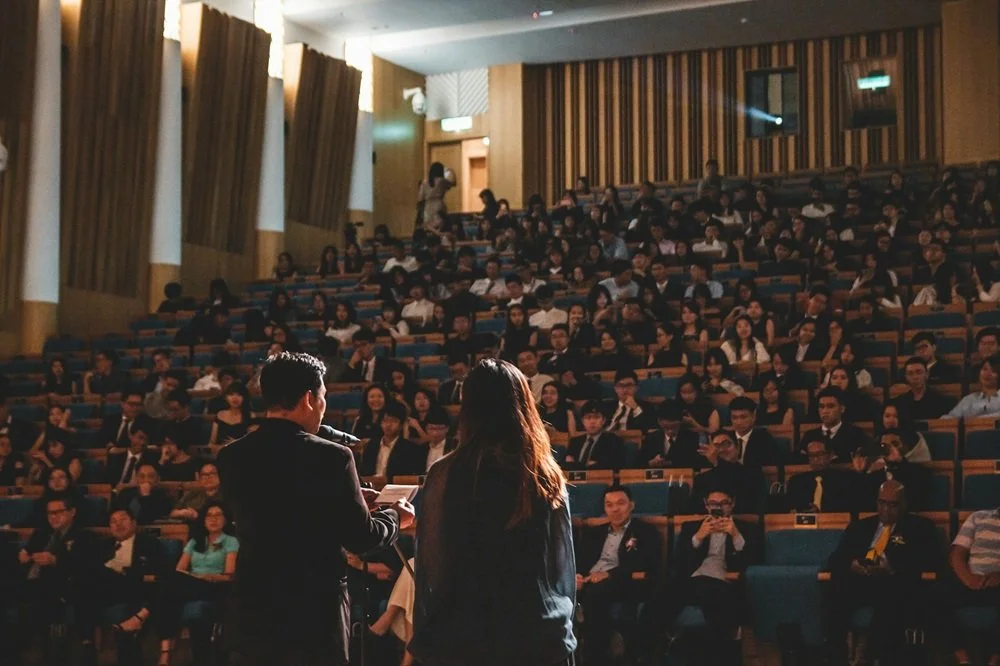
Why Spatial Audio Matters for Live Events
Live events are all about creating memorable experiences, and sound plays a crucial role in that. Spatial audio enhances this by making audiences feel more connected to what’s happening on stage.
Greater Immersion
Audiences can feel as though they are inside the performance, rather than simply watching it.
Improved Clarity
By placing sounds in specific locations, spatial audio reduces overlap and muddiness, making each element easier to hear.
Consistent Experience
In large venues, sound quality can vary depending on where you are seated. Advanced speaker arrays and processing help deliver a more uniform experience across the audience.
From concerts to theatre productions and corporate events, spatial audio is elevating expectations of what “good sound” means.
Transforming Streaming Experiences
As streaming becomes the dominant way people consume live and recorded content, spatial audio is playing an increasingly important role in bridging the gap between physical and digital experiences.
A More Cinematic Feel
Viewers watching at home can enjoy a sound experience that rivals being there in person.
Headphone-First Design
With spatial audio optimised for headphones, creators can deliver immersive sound without requiring complex speaker setups.
Engagement
Immersive audio keeps audiences more engaged, which is particularly valuable for live-streamed events, concerts, and esports.
Streaming platforms and device manufacturers are aligning their ecosystems to support spatial formats, accelerating adoption.
Challenges and Considerations
While spatial audio offers exciting possibilities, it is not without challenges:
System Design Complexity: Integrating multiple speakers, processors, and networks requires careful planning
Cost of Hardware: High-quality immersive setups can be a significant investment
Skill Requirements: Engineers must understand both creative and technical aspects of spatial workflows
Standardisation: Multiple formats and platforms can create compatibility challenges
Despite this, the rapid evolution of both hardware and software is making spatial audio more accessible each year.
What the Future Holds
Spatial audio is not just a passing trend - it represents a fundamental shift in how sound is designed and experienced. Looking ahead, we can expect:
Smarter, more compact processing hardware
Greater integration with video, lighting, and control systems
Increased use of AI in spatial mixing and optimisation
Wider adoption in venues of all sizes
As the technology matures, immersive audio will become a standard expectation across both live and digital experiences.
Want to discuss this further?
Our friendly AV experts are here to help:
0113 256 2200