

How businesses can boost staff productivity using audio visual technology
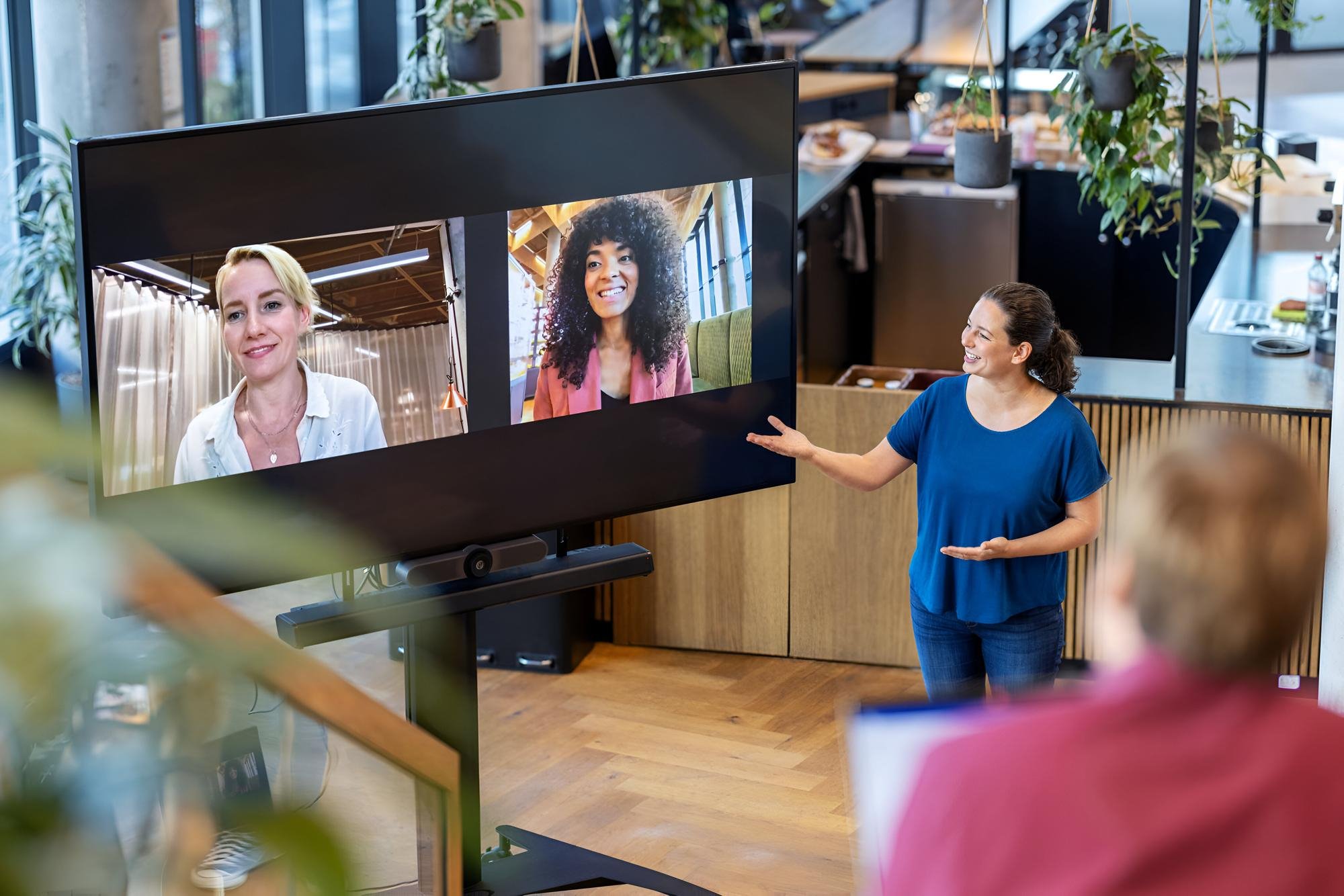
In today's fast-paced business environment, organisations are constantly seeking ways to enhance employee productivity and collaboration. Whilst many factors contribute to workplace efficiency, one often underutilised area is audio visual technology. Modern AV solutions can transform how teams communicate, collaborate, and ultimately perform. Here's how businesses can leverage audio visual technology to create a more productive workforce.
Creating Seamless Hybrid Work Environments
The shift to hybrid working has fundamentally changed how we approach productivity. Employees splitting their time between home and office need technology that works effortlessly in both settings. High-quality video conferencing systems with AI-powered auto-tracking cameras ensure remote participants feel equally engaged in meetings, reducing the frustration of being "second-class attendees" on video calls.
Investing in proper audio visual infrastructure for meeting rooms - including quality microphones, speakers, and large-format displays - means less time troubleshooting technical issues and more time focusing on actual work. When staff can join meetings with a single click and be seen and heard clearly, it removes barriers to effective collaboration.
Reducing Meeting Fatigue Through Better Technology
Poor audio visual setups are exhausting. Employees straining to hear colleagues, dealing with echo or feedback, or squinting at inadequate displays all contribute to meeting fatigue. Quality AV hardware addresses these issues directly.
Modern beamforming microphones with noise cancellation technology filter out distracting ambient sounds, whilst intelligent speakers adjust volume based on room acoustics. When participants can communicate naturally without technical distractions, meetings become shorter, more focused, and ultimately more productive.
Enhancing Training and Knowledge Sharing
Audio visual technology transforms how organisations deliver training and share knowledge. Interactive displays allow trainers to annotate content in real-time, making complex concepts easier to grasp. Recording capabilities mean training sessions can be captured and shared with staff who couldn't attend live, creating a valuable knowledge repository.
For technical training or demonstrations, high-resolution displays and multiple screen setups allow instructors to show detailed processes clearly. This visual clarity reduces misunderstandings and accelerates the learning curve, getting employees up to speed more quickly.
Facilitating Better Decision-Making
When teams can visualise data effectively, they make better decisions faster. Large-format LED displays and interactive screens allow groups to explore dashboards, reports, and presentations collaboratively. Rather than crowding around a laptop screen, teams can work together with content displayed at a scale that encourages participation and discussion.
Cloud-based AV systems enable teams to access and share content instantly from any location, ensuring everyone has the information they need when they need it. This immediacy reduces delays and keeps projects moving forward.
Supporting Flexible Workspaces
Modern offices increasingly feature various types of workspaces - from quiet focus areas to collaborative zones. Audio visual technology can adapt to support different work styles. Huddle rooms equipped with compact conferencing systems give small teams private spaces for quick discussions without booking large meeting rooms.
Digital signage throughout the office can display wayfinding information, room availability, company announcements, and even wellness reminders, helping staff navigate their day more efficiently.
Automating Routine Tasks
AI-enabled AV systems can automate many routine meeting tasks that previously consumed valuable time. Automatic meeting transcription allows participants to focus on discussion rather than note-taking. Real-time translation features break down language barriers in multinational organisations. Auto-framing cameras eliminate the need for someone to manually adjust video angles.
These automations might seem small individually, but collectively they free up cognitive energy and time that employees can redirect towards higher-value work.
Improving Workplace Communication
Clear, reliable communication is fundamental to productivity. Modern audio visual systems integrate with collaboration platforms, allowing teams to share ideas through multiple channels - video, audio, screen sharing, and digital whiteboarding - all within unified systems.
When communication flows smoothly, projects progress more efficiently. Staff spend less time clarifying misunderstandings or waiting for information, and more time executing tasks.
Measuring and Optimising Usage
Advanced AV systems provide analytics on room utilisation, equipment usage, and even meeting patterns. These insights help organisations optimise their technology investments and workspace allocation. If data shows certain meeting rooms are underutilised whilst others are constantly overbooked, facilities managers can make informed decisions about reconfiguring spaces or adding resources where they're most needed.
The Return on Investment
Whilst quality audio visual technology requires upfront investment, the productivity gains often justify the cost rapidly. Consider the cumulative time saved across an organisation when meetings start promptly without technical difficulties, when remote employees can participate fully, and when training is more effective. These efficiencies compound over time, delivering substantial returns.
Moreover, modern AV-Service models allow businesses to access cutting-edge technology through manageable subscription fees rather than large capital expenditures, making sophisticated systems accessible to organisations of all sizes.
Looking Forward
As audio visual technology continues to evolve with artificial intelligence, cloud integration, and improved display technologies, the potential for productivity enhancement will only grow. Organisations that invest thoughtfully in AV infrastructure today position themselves to attract talent, support flexible working arrangements, and maintain competitive advantage through operational efficiency.
The question isn't whether audio visual technology can improve staff productivity - it demonstrably can. The real question is whether your organisation is making the most of the opportunities available. In an increasingly competitive business landscape, can you afford not to?
Ready to explore how audio visual technologies can transform your organisation? Talk to one of our friendly AV specialists today:
0113 256 2200